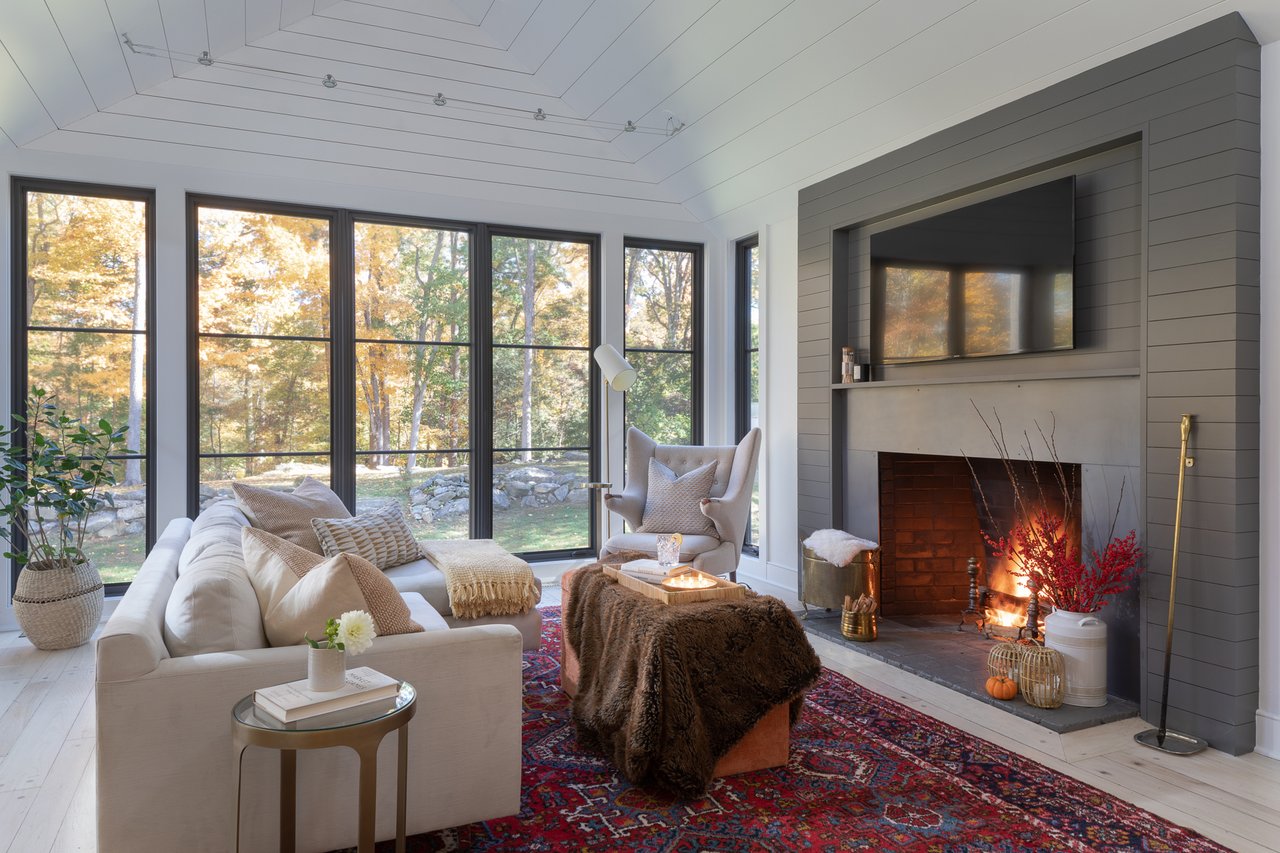
When preparing a home — whether for everyday living or for a future sale — architectural and design details matter. Fireplaces, in particular, remain one of the most emotionally impactful features for buyers.
This curated conversation with Burr Salvatore Architects and Amy Andrews Interiors highlights the design considerations, materials, and timeless choices homeowners are prioritizing today. While I did not conduct this interview, I often share expert perspectives like this with clients to help them make informed, value-driven decisions about their homes.
As the weather turns cooler, the fireplace naturally becomes the heart of the home — a place for gathering, warmth, and quiet moments at the end of the day.
Whether part of a renovation or a new build, fireplaces continue to be one of the most requested architectural and design features in luxury homes. To better understand what homeowners are asking for today, we spoke with Mary Burr and Ryan Salvatore of Burr Salvatore Architects, along with Amy Andrews of Amy Andrews Interiors, about the most common questions, trends, and design considerations surrounding fireplaces.
Updating a Fireplace: Where to Begin
A fireplace adds character and visual focus to a room, but updating one requires thoughtful planning. According to Amy Andrews, the first decisions homeowners should make are whether the fireplace will be wood-burning or gas, and whether its primary purpose is decorative, functional, or both.
In renovation projects, one of the most important — and costly — elements to consider is the existing firebox. Its location and condition often dictate what is possible from both a design and budget standpoint.
Gas vs. Wood: A Question of Experience and Efficiency
Burr Salvatore Architects often design wood-burning fireplaces with gas starters, combining convenience with the authentic look, sound, and scent of a traditional fire.
While direct-vent gas fireplaces are among the most efficient heating options — retaining warmth rather than losing it through a chimney — some clients prefer the unobstructed look of open fireplaces without glass panels. An added advantage of direct-vent gas systems is flexibility: they do not require a chimney and can vent through an exterior wall.
Fireplace Accessories: Decorative or Discreet?
Accessories such as tools, logs, and kindling can be both functional and decorative. Burr Salvatore Architects view tool sets as a potential design element and log storage as an opportunity to add architectural interest.
Amy Andrews emphasizes the importance of a well-chosen log set, noting that it provides the finishing touch that completes the fireplace visually.
Mantels: Timeless Design Over Trends
While reclaimed timber mantels have become popular in recent years, Burr Salvatore Architects caution against overly trend-driven choices that may quickly feel dated. Mantel design is also heavily influenced by building codes, which strictly regulate clearances and projections around combustible materials.
Older fireplaces often featured tighter proportions, while modern codes require more generous spacing. Antique mantels can be beautiful, but sourcing one with suitable proportions for contemporary fireboxes can be challenging.
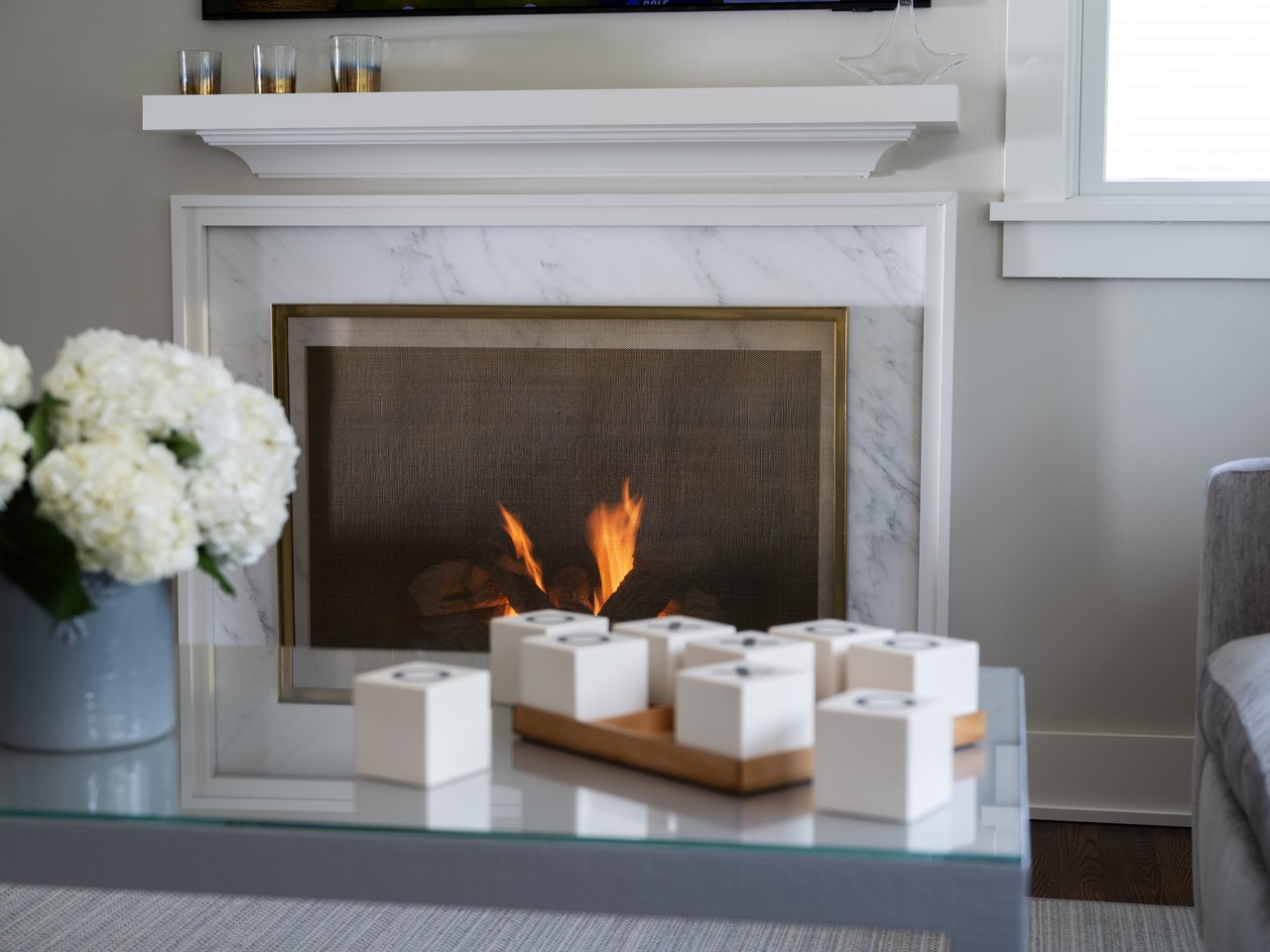
Amy Andrews often turns to stone or marble surrounds for a refined, timeless look. Handmade marble, in particular, offers a sense of luxury and must be carefully scaled to the room. She notes that honed stone can feel rich and sophisticated, while lighter stone paired with detailed millwork can create an elegant yet whimsical effect in more intimate spaces.
Hearth Design: Flush or Raised?
In most cases, a flush hearth creates a clean, seamless look. However, there are moments when a raised hearth can be intentional — doubling as additional seating and becoming part of the room’s design language.
In some instances, a raised hearth is required to accommodate gas fireplace inserts, which must sit above the finished floor.
Materials, Color, and Firebox Details
Fireboxes must be constructed of firebrick, which comes in a limited color palette but can be painted. Herringbone patterns remain a favorite for adding subtle visual interest.
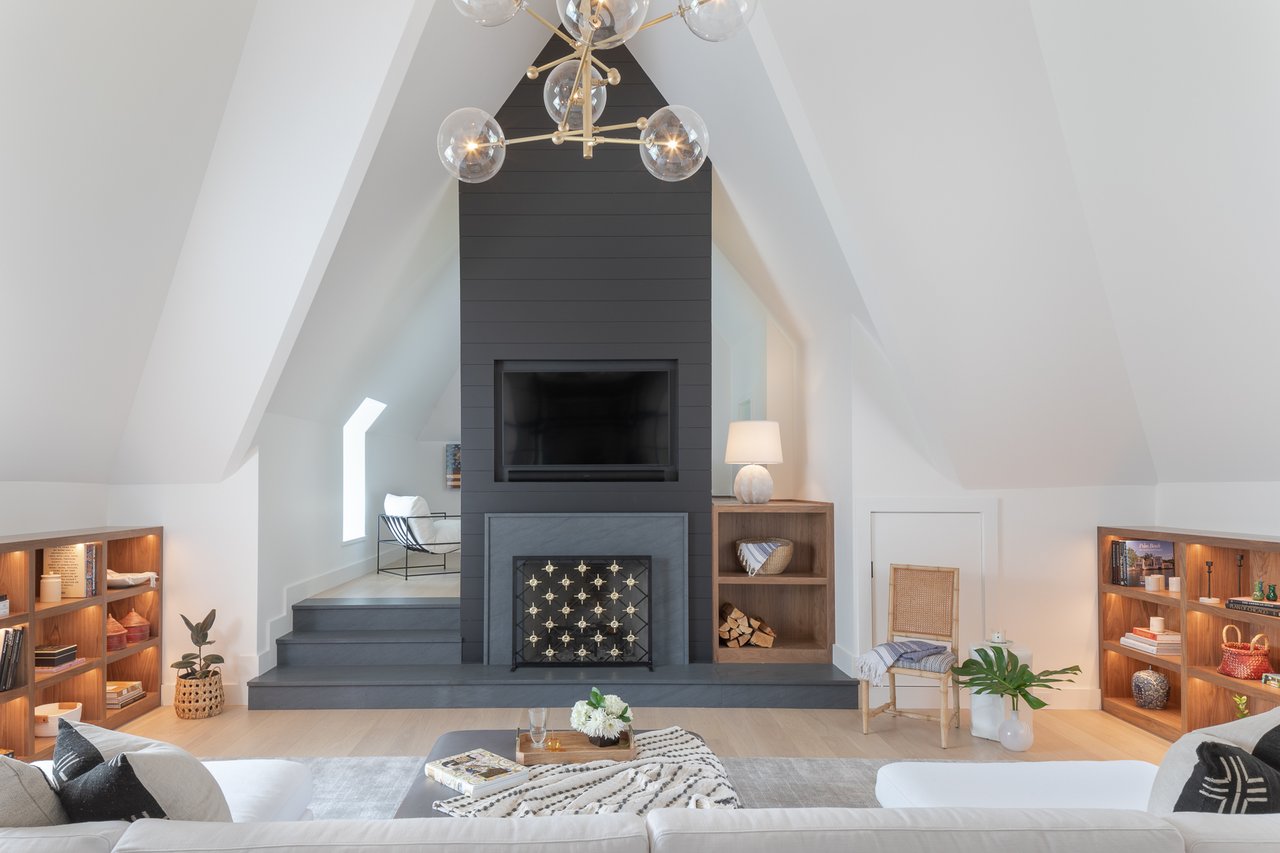
Burr Salvatore Architects often pair wood mantels with classic dark gray granite slips and matching hearths — a combination they describe as timeless and reliable.
Amy Andrews notes that firebrick can remain traditional in red, be painted black, or finished in other tones depending on the desired mood. Small decisions, such as brick layout or color, have a significant impact on the overall feel of the fireplace.
Fireplace Screens: Functional Jewelry
Both architects and designers agree that fireplace screens can be a defining accessory. Removable screens are generally preferred for flexibility, and when custom-made, they become the equivalent of fine jewelry for the fireplace.
Amy Andrews emphasizes proper fit as essential and notes that custom metalwork elevates the entire installation.
When to Go Floor-to-Ceiling in Stone
A full stone fireplace wall is most effective in rooms with the scale and architectural presence to support it. In mountain or second-home settings, an all-over stone fireplace paired with a wood mantel can create a striking indoor-outdoor, lodge-inspired aesthetic.
Final Thoughts
Fireplace design is a balance of function, proportion, material, and restraint. While trends come and go, the most successful fireplaces are those designed with intention — grounded in architecture, tailored to the space, and finished with thoughtful detail.
As homeowners continue to invest in spaces that invite comfort and connection, the fireplace remains a timeless focal point — especially when designed with care.
Contact
If you’re considering buying or selling a home in Fairfield County and would like guidance on how architectural and design features impact value and buyer appeal, reach out to me today.
Christine Finch Oleynick
[email protected]
203-912-9712